Search This Blog

Showing posts with label #india. Show all posts

Wednesday, April 30, 2014

Magical April 2014–Mount Abu

Magical April 2014


"Escape to the picturesque Mount Abu hill station for a peaceful retreat."
"Escape to the picturesque Mount Abu hill station for a peaceful retreat"
In spring.


"Explore the diverse birdlife of Mount Abu' in spring
Magical April 2014


It is the end of April — 30 April 2014 —, and India stands on the brink of one of the most significant political moments in its recent history. The nation is in the midst of a historic general election, and people across the country are watching, wondering whether the coming results in mid-May will bring a new sense of stability and direction. The world also observes with keen anticipation.

 Up here in Mount Abu — often called “The Abode of the Gods” — life continues at its own measured pace.

Summer has made its presence felt. Temperatures in the plains are already soaring to 45°C, while here on the hill the mercury is climbing towards 40°C. Across parts of India, unexpected heavy downpours and hailstorms have lashed the countryside, leaving many farmers disappointed as their crops have been damaged. Though May brings rain, this year the weather has already shown its unpredictable side.

Yet despite the heat, April remains a magical month in Mount Abu.

The hills burst into colour as wildflowers bloom in countless shades, painting the landscape in vibrant hues. The forests and gardens come alive with birdsong as many species begin raising their first broods of the season. It is a time of renewal and quiet activity in nature.

As the plains bake under the harsh summer sun, travellers from neighbouring states start their annual migration to the cool refuge of the Aravalli hills. Families, pilgrims, and tourists arrive seeking respite from the scorching heat, and Mount Abu welcomes them all.

This oasis in the desert has long been a destination for every season. Whether one comes for the spiritual calm of its temples, the cool forested walks, or the pleasure of mountain air, the hill station offers a refreshing escape from the intensity of the plains.

With summer approaching, the festive spirit too stirs — for the Mount Abu Summer Festival is just around the corner, promising music, culture, and celebration in the hills.

So whether you come for nature, peace, or adventure…

Welcome to the Abode of the Gods.


Also, visit my other blog:
Mount Abu Birds – where I share my personal birding diary and wildlife observations from the hills of Mount Abu.

Sunday, March 28, 2010

“Takayasu Arteritis” rises from its slumber Mount Abu.

Takayasu Arteritis: A Battle Rekindled


Liz, my better half, had lived a normal life since being diagnosed with Takayasu Arteritis—the so-called “pulseless disease”—in 2003. Over two decades, she battled the disease with remarkable resilience and determination. Life was stable until a year ago when troubling signs emerged. 

The initial sign of trouble appeared as large, blister-like sores on her right leg, the same leg where she’d lost toes. Soon after, signs of discolouration appeared on her left leg. Alarmed, I consulted our family doctor, who prescribed a course of antibiotics and ordered blood tests to rule out further complications. The treatment seemed to help, but deep down, I sensed something was still amiss. 

Liz, ever stoic, insisted she was fine. However, being her husband and a perceptive observer, I noticed subtle shifts in her behaviour. She was losing her calm; quiet desperation was growing. It became clear she was grappling with more than just physical discomfort. 

In India, many seek soothsayers and spiritual leaders, driven by anticipating miracles. Seeking solace, Liz turned to their assurances. While these moments offered her fleeting hope, I knew the disease’s resurgence was a more likely explanation for her worsening symptoms. 

Takayasu Arteritis is a relentless foe. The disease, while eradicated by treatment from 2003 onwards, was, in fact, dormant. It was as if the December cold jolted it awake. I would often find Liz rubbing her legs at night, unable to find relief. The disease, silent for seven long years, had returned with a vengeance. 

The reasons for this resurgence remain unclear. Was it triggered by the cold? The natural progression of ageing? Or had Liz stopped her medication at some point? Whatever the cause, the path forward was grim. Liz, who avoids hospitals passionately, had no choice but to undergo a series of medical investigations. 

Our family doctor, Dr. Sharma, referred us to Life Care Hospital in Ahmedabad. Liz travelled ahead of me on January 16th to meet our daughter Jennifer, who had just returned from Shillong. I joined them two days later to celebrate Keith’s birthday, though the looming shadow of her health made celebrations difficult. 

At the hospital, they performed a Doppler test on Liz’s leg. The results confirmed our worst fears. Dr Samir Dhani, a specialist recommended to us, broke the devastating news: the capillaries supplying blood to Liz’s right foot had deteriorated beyond repair. The only option was amputation. 

Hearing those words felt like a blow to my chest. How could I prepare Liz for such a life-altering decision? How could I shatter her fragile hope with this heartbreaking truth? 

Liz had faced Takayasu Arteritis for years with remarkable courage, but this was a battle unlike any other.. As I stood outside her hospital room, grappling with the weight of this revelation, I knew our journey was far from over.  


The Doppler test conducted on 16 Jan 2010


The Doppler reports made out by Dr.Darshan

Prognosis of Dr.Sameer Dani


rang Dr Dushyant on the 18th of Jan and set up an appointment for her admission to Life Care Hospital. I had appraised Liz on her condition and said she needed hospitalization. She went into depression and began to sob. She did not want her leg amputated. I assured her no one would amputate her leg without her consent. I told her they would run some exclusive tests on her to determine the condition of her leg and her overall state.


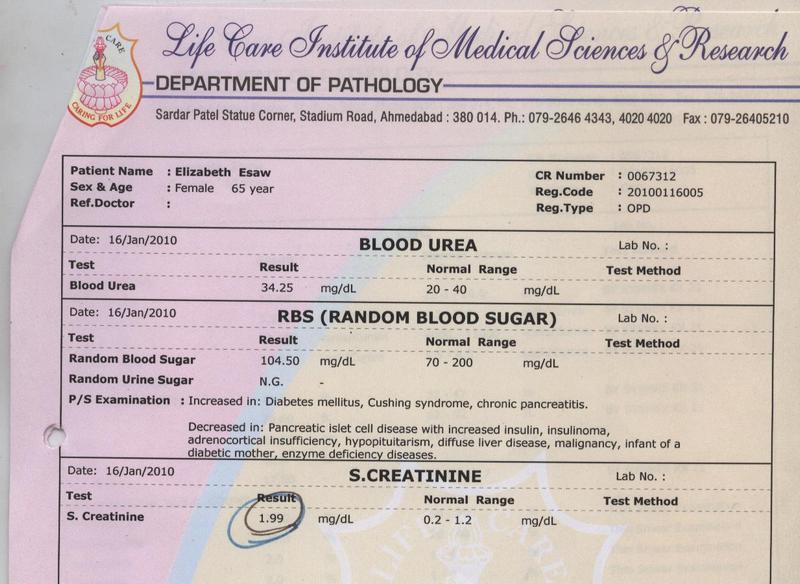
They admitted Liz to the hospital on January 20th. She remained there for a week, being pumped with IV medicine day and night and having numerous blood tests performed on her. A team of experts came to see her to assess her condition. It had been a long and exhausting week for everyone present. She did not experience the excruciating agony she had been experiencing previously when on medicine. On the 26th, she was given another Doppler test to evaluate if her foot had improved after all the medicine she had received.

While she was in the hospital, I gently informed her that it would be best if she prepared herself for an amputation. I called her mentor, Dr. Anandan in Chennai, and asked him to help her see the light. I enlisted the help of my other friends and her older daughter to psychologically prepare her for the trauma. She was sick of being in the hospital and wanted to go home. I prepared her discharge papers and planned to take her home, but before I did, I left I spoke with Dr. Dushyant and informed him that I would be back soon with her for the amputation since there was no other option than for her to suffer through the agony of dry gangrene.
Her Doppler, done the day before her discharge on the 26th, revealed just a little improvement over the previous Doppler test. I knew it was curtains for her right leg and that it would only be a matter of time before Liz realised it would be better to get rid of it than to live through the excruciating agony that the pain would cause her.